The ironic comeback of the modern mullet fade is far behind. Go to any decent barbershop session these days, and you’ll hear this cut on the request list, right next to fades and tapers. It does a really good job of solving a real problem most men have; they want something that looks sharp from the front, that will last in the workplace, and that will come across as their own and have personality to it.
This guide will teach you more than just the difference between a modern mullet fade and the old version, the types of fades that are appropriate for your face and hair, how to care for them, and what to tell your barber before you sit down.
What is a Modern Mullet Fade anyway?
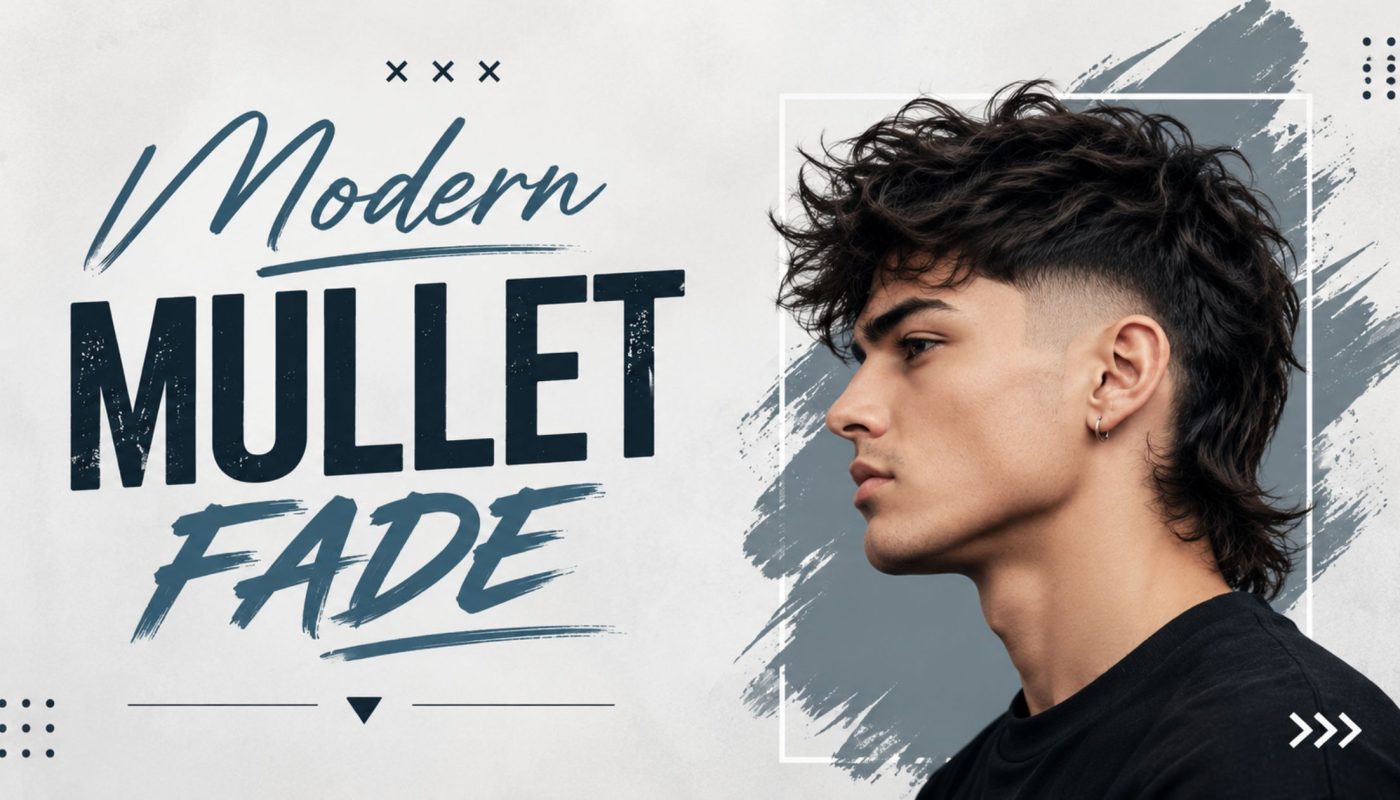
The beginning of the 80s’ mullet was a flat, rough-edged thing with no real structure to the sides. The modern mullet fade solves all that. The concept doesn’t change at all: short hair at the front and top, and long hair at the back. However, the sides are now worked in a fade technique, where the length down is smoothed out as opposed to creating a disconnected hard wall.
The outcome is a cut that appears deliberate from any angle. The front may be either textured or soft. The back is usually the length, with a layering to make it bulkier. The sides, whether low, mid, or high fade, tie the overall shape together nicely.
It’s not only the fade, but what makes it modern. It’s the cutting style that barbers employ today with the intention of creating an effect of weight removal, point cutting, and layering to give the back a flowing look. If carried out properly, you end up with something that seems easy but is quite difficult.
Many mullet fade variations have become popular in recent times.
Not every mullet fade is the same haircut. The fade height alone changes the entire personality of the style. Here is how the main variations break down.
Low Fade Mullet
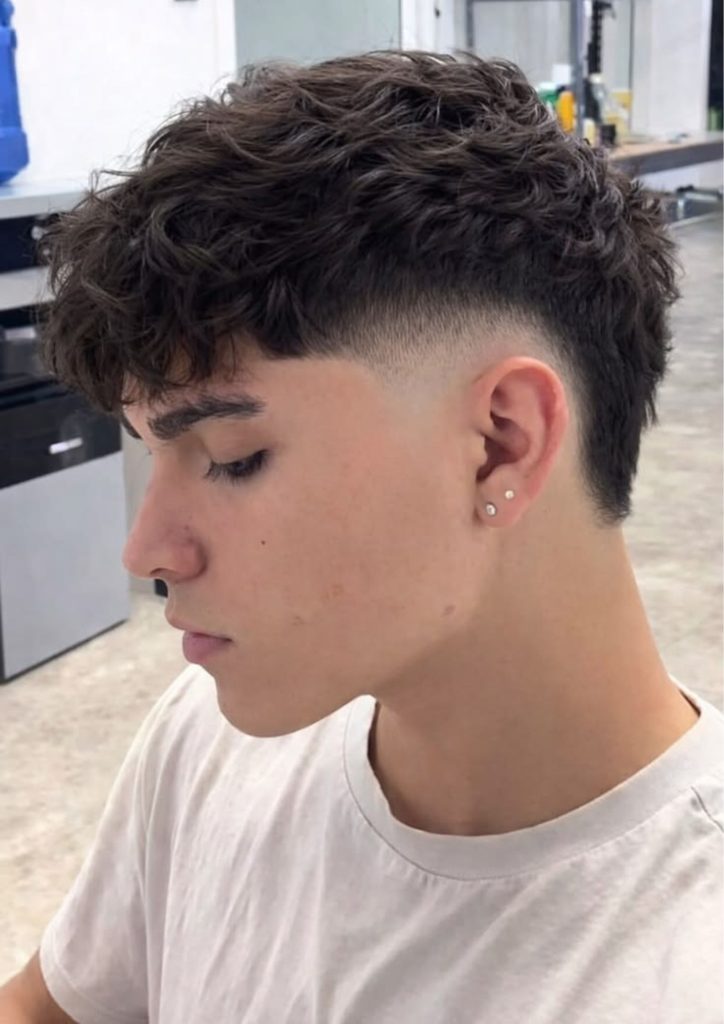
The low fade begins just above the ears and ends at the neckline. Provides the lowest contrast between sides and top, ensuring a subtle and clean look overall. This is the most office-friendly version and is also a great choice if you are experiencing a mullet for the first time and you don’t necessarily want to go all out on the style.
Mid Fade Mullet
The high fade begins near the crown of the head. It makes for a striking contrast and a contemporary shape to the cut. This is the perfect style for those men who wish the style to be seen, as well as those who have thicker hair, where the sides will give the hair a fuller appearance.
High Fade Mullet
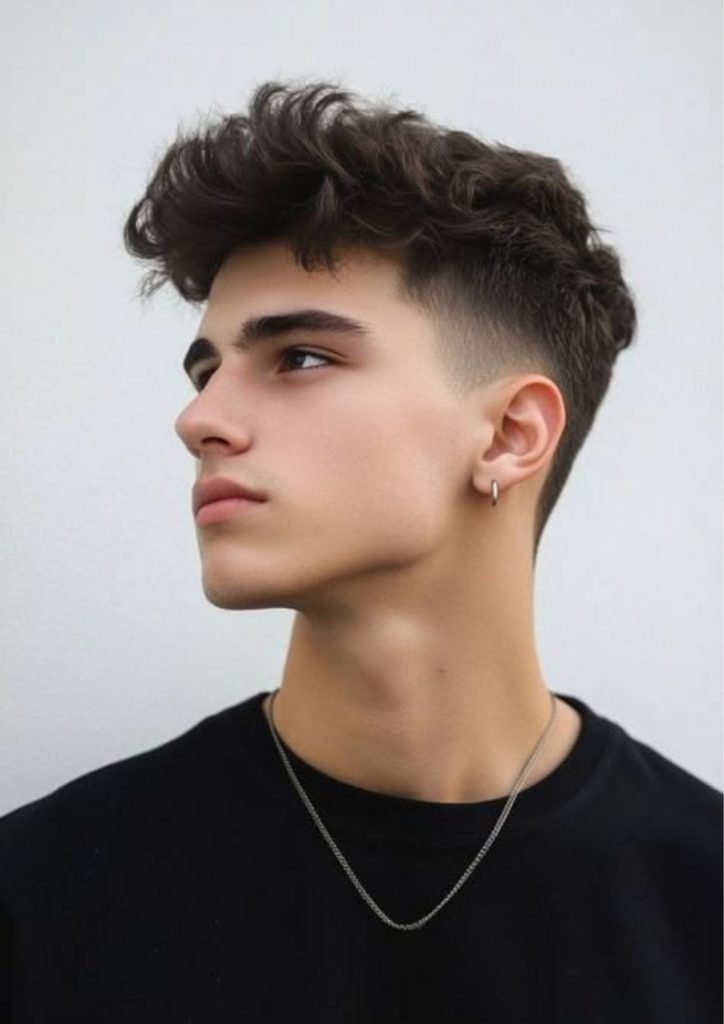
The high fade starts close to the top of the head. It creates a strong contrast and gives the cut a bold, modern silhouette. This version works best for men who want the style to be noticed and for those with thicker hair that benefits from the volume reduction on the sides.
Taper vs Fade: A Quick Note:
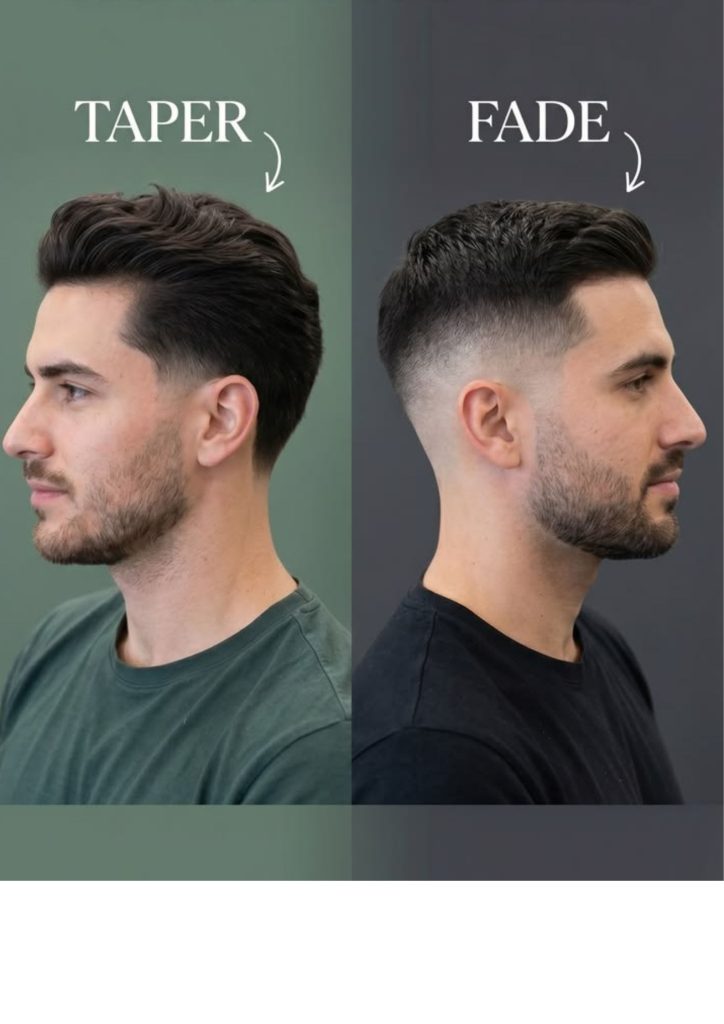
A taper is NOT a fade. Taper: This style is made by taking some hair on the sides while gradually narrowing the sides towards the sideburns and neckline. A fade will go all the way down to the skin. A taper mullet may be a better option than a full fade if you prefer a more subtle, mature appearance that will gradually fade with time.
Burst Fade Mullet
The fade is not straight up the side of the head but rather is curved around the ear. It defines the outline of the ear and gives it a gentle curve. With a mullet, it forms a natural-looking outline, particularly effective for wavy or curly hair.
Selecting the Perfect Modern Mullet Fade for Your Face Type
Getting the cut right is not just about picking a style you saw online. The shape of your face plays a real role in which version will actually look good on you.
Oval face: These faces are the most versatile. Almost any combination of the modern mullet fade is effective. You can be short or long, textured or smooth, you can go either way.
Round face: A higher fade with a slightly longer, more angular back will help elongate the face. Avoid excessive volume on the sides and at the crown simultaneously.
Square face: The mullet can play on your side since the length at the back eases the jaw. The sides won’t get too wide with a mid or low fade.
Oblong or long face: A lower fade and a slightly shorter back work better here. You want to avoid adding more length vertically, so a fringe or textured crop on top is a smart pairing.
Diamond face: The fringe at the front and length at the back balance the narrow forehead and chin naturally. This is one of the better face shapes for a classic mullet fade structure.
How to Style a Modern Mullet Fade at Home
Getting the cut is the first half. Styling it properly is the second. Most men overcomplicate this or use the wrong products.
For straight hair: Apply some sea salt spray or texture spray to damp hair and gently dry with your hands. When it is largely dry, apply a matte clay or paste, lightly work it in without crunch for definition. When drying the back, it should be air-dried or blown dry with a diffuser to prevent the back from flattening.
Wavy hair: A curl cream or mousse will work well on wavy hair; just apply it to the backside when it is still damp. Gently scrunch it up and allow it to dry. Light pomade or wax can be used for a stylish front and top application for holding without stiffness.
For curly hair: If you have curly hair, moisture is key. Apply a leave-in conditioner to the back when hair is damp. A curl-defining cream will help to keep the curls from frizzing while sitting smoothly. Faded sides will take care of themselves. The top can be gently lifted off to remove for volume or left as is.
There’s one rule to follow for all hair types: Do not use heavy, shiny products on the back. They weigh down the hair and suppress the liveliness of the cut. A matte or light-weight product is best.
What to Tell Your Barber
While walking in and saying ‘modern mullet fade’ is a good start, it’s not specific enough. Your barber will thank you for the detail, and you will avoid getting something you didn’t imagine.
Let them know if you want it low, mid, or high. Let them know how long you wish the back, in inches if possible, or by indicating where you want the length to be placed. Note if the back is to be layered for movement or uniformity. If you wish to get a fringe along with any particular shape at the front, describe that also.
While a description is sufficient for barbers to understand what they should do, it’s good to bring a photo with you, because there’s no need to guess and there’s no disclosing the secret!
Maintenance and Upkeep
Modern mullet fade has a definite form to it, and this form relies on consistent maintenance. Especially the fade-in grows out a lot faster and begins to lose its crispness in a couple of weeks.
Men with this cut will require a touch-up every 3-4 weeks at least to maintain a tight fade. The sides will begin to look overgrown before the back and top need to be mowed.
The rest of the barbershop will go a long way if the back is kept moisturized and the top is set right between visits to the barbershop. When it comes to a haircut, a well-cut and well-maintained one will always beat a great haircut that is not well-maintained.
Conclusion
The modern mullet fade is one of the few types of haircuts that do exactly what their name implies. It provides you with a style with a true face without any extreme look, and it suits your hair type, your face shape, and your lifestyle even before you try it.
The key to getting a sharp mullet fade versus a dull one is largely down to detail, such as the right fade level, the correct layers in the rear, and a barber who knows the modern approach to cutting a mullet. If you get these correct, you’ll have a haircut that will look great from the barbershop chair to the office or anywhere else throughout your week.
The haircut you choose is the central theme of BarberMane – it should suit your face, hair texture, and lifestyle. From a first mullet fade to a more advanced one, it’s the details that make the difference.
Frequently Asked Questions
Can a modern mullet fade be used in the workplace?
Yes, in most cases. The answer is the fade height and back length that you select. A low or mid fade with a moderately short back is considered a clean and planned fade in most businesses. A long fade with a very long fadeback could be more noticeable in more conservative settings. Tweak this according to your environment, and you’ll have no problem.
Which hairstyles are best for a modern mullet fade?
This cut is suitable for any type of hair. Straight hair features clean lines and a classic hair shape. Wavy and curly hair are other features that can lend a natural texture and movement behind the cut, making it appear even better.
What is the time frame for a modern mullet fade from scratch?
When short-hacked, it will take approximately 3 to 5 months to grow enough length at the back to be able to shape a good mullet. The sides will grow faster, and the front will grow while waiting for the back to grow, so, in the meantime, you will be maintaining the fade.
Is it possible to get a modern fade with a balding crown?
Yes, and this frequently proves to be effective. The length and texture at the back add a focal point that draws the attention towards the back, while a low or mid fade takes the focus down and away from the hairline. The secret is to use what you have, not against it. If you want to hide your receding hairline, you can take the help of a skilled barber in structuring the cut in a way that complements your receding hairline.